
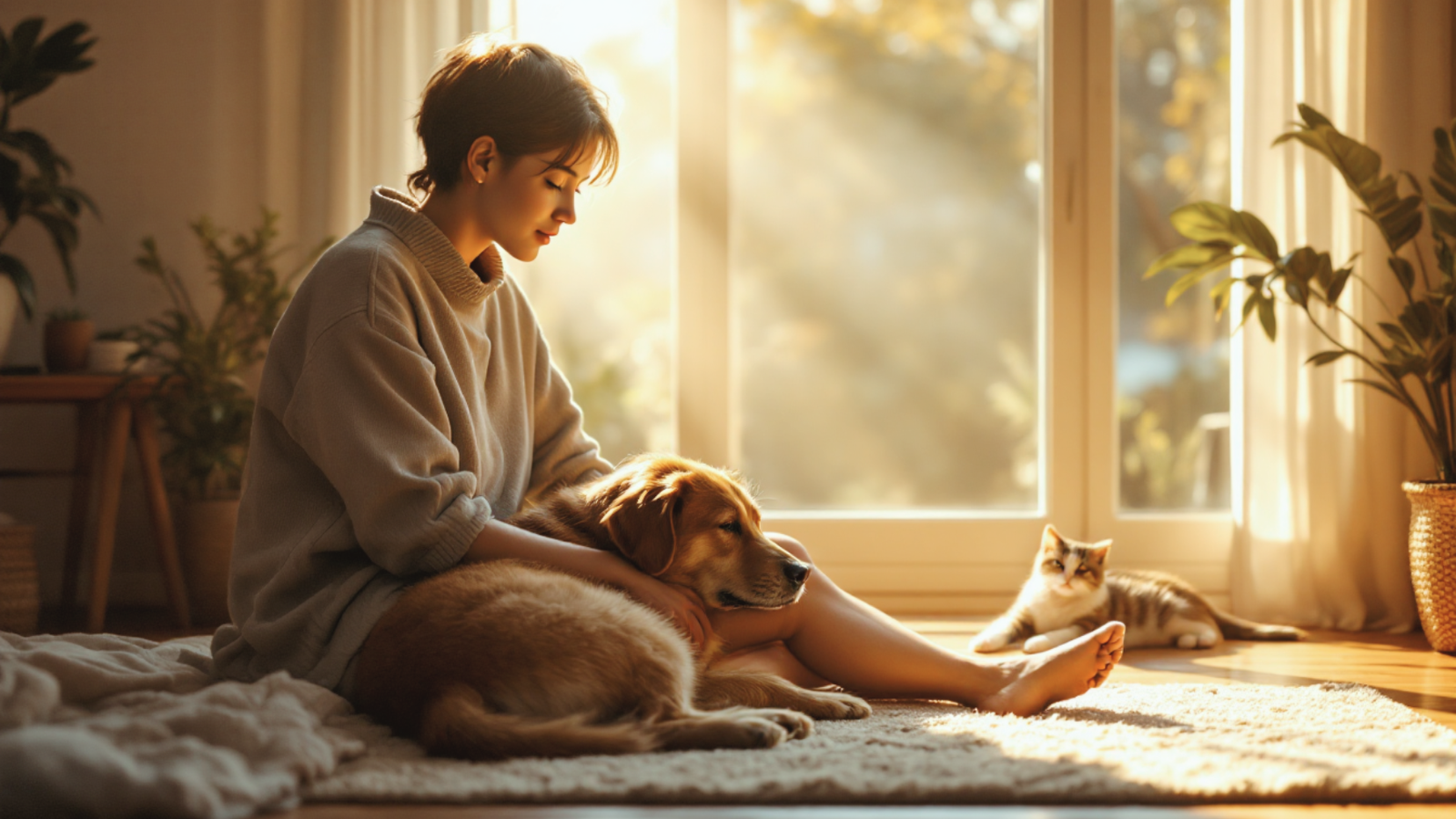
What Our Pets Teach Us About Life
When Fur Meets Heart
I used to think I was doing my dog a favor by adopting him. Rescue stories always paint the human as the hero, don’t they? But several years in, I’m starting to suspect he rescued me instead. Not in some dramatic, pull-me-from-the-brink way—more like he quietly pointed out all the ways I was rushing through life without actually living it. “Some of our greatest lessons in patience, loyalty, and joy come wrapped in fur.” This observation from Dean Koontz captures something most pet owners eventually stumble into: the animals sharing our homes aren’t just companions. They’re teaching us things we didn’t even know we needed to learn. Which means admitting we needed teaching in the first place.
Teachers in Disguise
That last part is harder than it sounds. We adopt pets thinking we’ll train them—sit, stay, come—and meanwhile they’re taking notes on us. How we react when things don’t go according to plan. Whether we show up the same way on bad days as good ones. What it takes to get us to stop scrolling and actually pay attention to what’s right in front of us. I didn’t want to learn patience. I wanted my nervous rescue cat to trust me on my timeline, which is a funny thing to expect from a creature who spent the first year of her life learning that humans aren’t safe. Three weeks of her hiding under the bed taught me more about my own impatience than any self-help book ever did. Turns out I’d rather push through discomfort than sit with it. She just waited me out.
A Writer’s Unexpected Guide
Novelist Anne Lamott once wrote about how her dog taught her more about love than most of the humans she’d known. She’d adopted the dog during a particularly difficult period, expecting companionship. What she got instead was a crash course in showing up—day after day, walk after walk, regardless of how she felt or what deadline loomed. The dog didn’t care about her writing struggles or her bad days. He needed his walk, his dinner, his attention. At first, this felt like an inconvenience. Eventually, she realized this consistent need was pulling her out of her head and into the present moment. The dog wasn’t interrupting her life. He was reminding her that life happens in these small, unremarkable moments we usually rush past.
What They Know
Here’s what I’ve been noticing: my dog doesn’t forgive me when I accidentally step on his tail. Forgiveness implies he held it against me in the first place. He just… moves on. Thirty seconds later he’s back, no grudge, no lesson I need to learn first. I’ve spent years working on forgiveness like it’s some advanced spiritual practice, and he demonstrates it multiple times a day without even trying. That’s not because he’s enlightened. It’s because he’s not keeping score.
What They Show
The cat finds the same patch of sunlight every afternoon and settles into it like she’s discovered something new each time. Not scrolling, not multitasking, not thinking about what comes next. Just fully occupying that warm spot for as long as it lasts. I’ve watched her do this hundreds of times and I still can’t replicate it—sitting in one place without my mind racing ahead to the next thing. She’s teaching me something about presence, except I’m a terrible student who keeps missing class.
And the joy thing? That might be the most uncomfortable lesson because it reveals how much permission I think I need. My dog finds a stick on our walk and acts like he’s won the lottery. No context needed, no achievement unlocked, no special occasion. Just a stick that exists right now. Meanwhile I’m over here waiting for the right conditions to be happy—when I finish this project, when I have more time, when things calm down. He’s demonstrating a completely different approach to living, and I’m usually too busy planning the next moment to notice the one I’m in.
One Moment Today
This morning, try something: watch your pet when they don’t know you’re watching. Not during feeding or playtime—catch them in some unremarkable moment. What I’m realizing is that my dog doesn’t have unremarkable moments. Every moment gets his full attention, even if that moment is just lying in a particular spot or watching birds through the window. He’s not waiting for his life to start. This is it, and he’s all in. Notice what that looks like. Then notice how you’re experiencing this exact moment while you’re watching them. One of you is fully here. The question is which one.
The Gift They Give
Our pets aren’t trying to teach us anything, which somehow makes them better teachers than most people who are. They’re just being themselves—patient when patience serves them, loyal because consistency is how they’re wired, joyful because the present moment is all they have access to. We’re the ones who get to decide whether we’re paying attention. The lessons arrive wrapped in fur, hidden in ordinary moments we usually miss because we’re thinking about something else. What makes this uncomfortable is realizing how much we’ve complicated things that could be simpler. How much we’ve forgotten about ways of being that used to come naturally before we learned to overthink everything.
Your Turn Now
Pay attention this week, but not to what you’re teaching your pet. Watch what they’re showing you about how to move through a day. Pick one specific moment when they’re fully present to something you would have dismissed as mundane. Write down exactly what you saw. Then ask yourself what you were thinking about while they were being there. The gap between those two things? That’s where the lesson lives.
Enjoyed this? Share with others and spread the inspiration!
Support Better Days

Join the Conversation
Making days better isn’t just about reading articles – it’s about sharing and supporting and here’s where you can do that:
Find daily inspiration and conversation on Facebook
Join the discussion on X (formerly Twitter)
Connect with fellow day-makers on LinkedIn
See what we’re up to on Instagram
Thanks for being part of making days better. Sharing helps light the path forward.