
Borrowing Tomorrow: Returning Earth Better Than We Found It
Tomorrow’s Inheritance
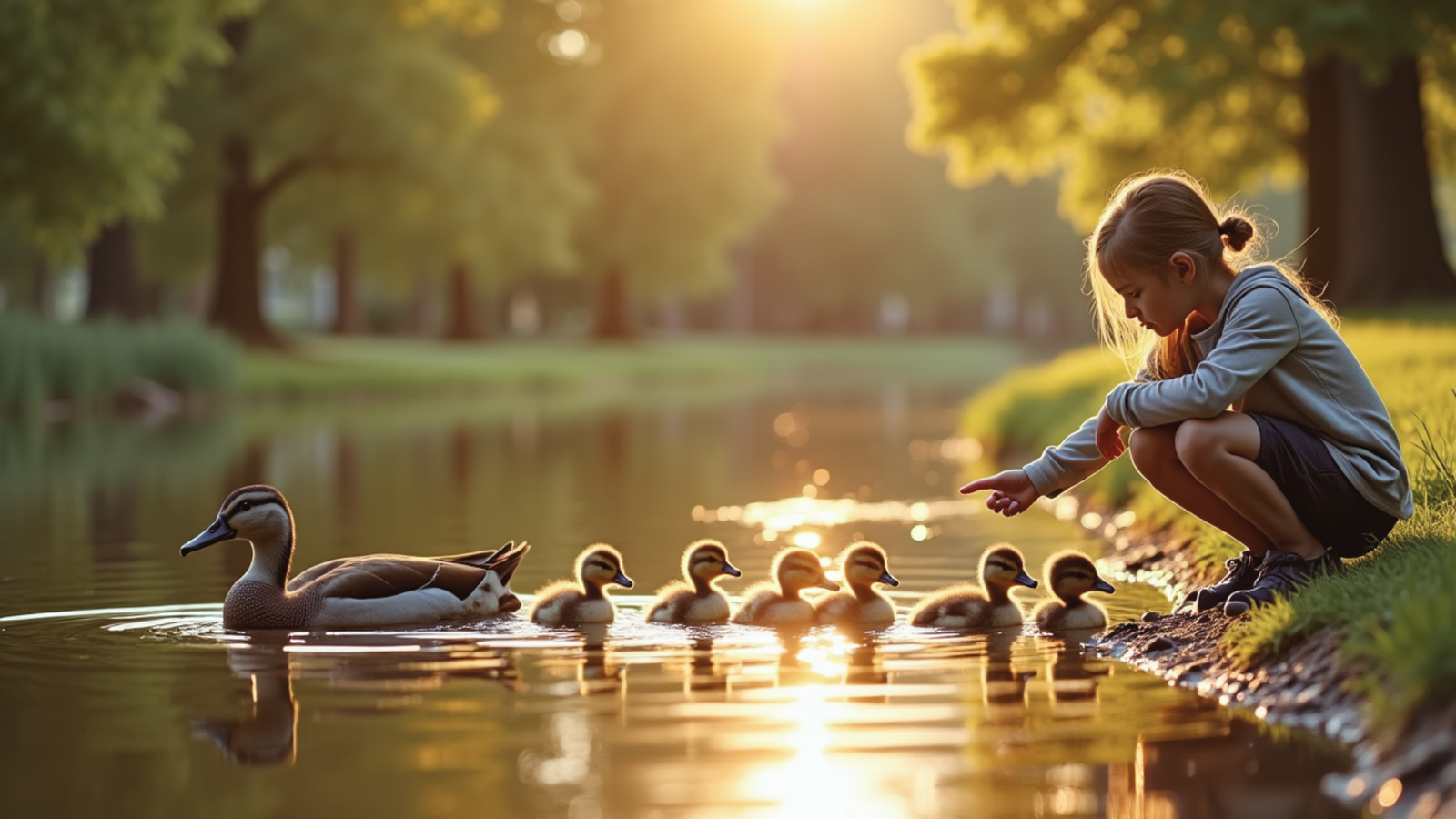
Last weekend, I was walking through our local park when I heard a child’s excited whisper: Look, Mom! Baby ducks! A soft breeze rippled the pond as the mallard family glided across, the mother cutting through the water in graceful arcs while tiny ducklings wobbled in her wake, their downy feathers catching the afternoon sunlight. The little girl was mesmerized, crouching at the water’s edge as the ducklings paddled behind their mother in a perfect line. Her mother knelt beside her, quietly explaining how the mama duck was teaching her babies to find food and stay safe. What struck me wasn’t just the wonder in the child’s eyes, but the realization that this simple scene—ducks thriving in an urban park—exists because someone decades ago decided to preserve this green space instead of developing it. It made me think about the woods behind my childhood home, once alive with fireflies and birdsong, now mostly silent subdivisions. We often think about what our ancestors left us, but there’s a deeper truth captured in an ancient Native American perspective: “We don’t inherit the earth from our ancestors, we borrow it from our children.” This profound shift in thinking changes everything about how we see our role as temporary stewards of the natural world.
Borrowed Time
This quote, often attributed to various Native American traditions, reveals a fundamental truth about our relationship with the planet. When we inherit something, it becomes ours to do with as we please. But when we borrow something—especially from someone we love—we treat it with care, knowing we must return it in good condition. The earth isn’t our permanent possession; it’s on loan from future generations who will need clean air, fresh water, and thriving ecosystems to survive. Every species that disappears on our watch diminishes what we can pass forward. Every habitat destroyed for short-term gain leaves a permanent gap in tomorrow’s world. This borrowed-time perspective transforms environmental protection from an abstract concept into a personal responsibility—one that makes every choice matter.
One Man’s Mission
If this idea of borrowed time feels abstract, consider the life of Douglas Tompkins, who embodied this philosophy in the most remarkable way. The co-founder of The North Face and Esprit fashion empire walked away from his business success in the 1990s to become one of the world’s most ambitious conservationists. He and his wife Kristine purchased over 2.2 million acres of degraded land in Chile and Argentina, restoring overgrazed wasteland into protected wilderness. Tompkins understood that wealth meant nothing if there was no wild world left to protect. His efforts helped bring jaguars back to Argentina and protected critical habitats for countless species. When he died in 2015, he had created thriving wildernesses that will benefit generations of both wildlife and people. His legacy proves that treating Earth as borrowed property leads to extraordinary acts of restoration.
Making It Personal
Living as Earth’s borrower doesn’t require Tompkins-level wealth or dramatic career changes—it starts with recognizing that every choice creates ripples. Start in your own space by creating wildlife corridors—even a small yard can become a stopover for migrating birds or a haven for native insects when you plant indigenous species and avoid pesticides. Consider the ripple effects of your purchasing choices: supporting companies that prioritize sustainable practices sends market signals that protection matters more than profit. Get involved locally by volunteering with wildlife rehabilitation centers or joining community efforts to preserve green spaces—these grassroots actions often have more immediate impact than distant donations. Perhaps most importantly, share the wonder with younger generations through nature experiences, teaching them to see animals not as resources to be managed, but as fellow Earth-borrowers deserving of respect and protection. Every small action becomes part of the legacy we’re preparing to return.
Today’s Promise
This week, choose one wild space near you—a park, trail, or even a tree-lined street—and visit it with fresh eyes. Look for signs of wildlife, from birds to insects to small mammals. Notice what’s thriving and what might need protection. Let this become your personal borrowed-earth checkpoint, a place where you can regularly witness the web of life you’re helping to preserve for tomorrow’s children.
The Return
The borrowed-earth mindset changes how we move through the world, making every choice an opportunity to leave something better than we found. When we see ourselves as temporary caretakers rather than permanent owners, conservation becomes not just environmental policy, but a fundamental expression of love for those who come after us. The mallard family that delighted that little girl carries forward a message of hope—that when we honor our borrower status, miracles of recovery become possible.
Begin Today
Start small, but start now. Choose one action today that treats Earth as borrowed property. Whether it’s switching to wildlife-friendly products, reducing plastic use, or supporting conservation efforts, let this moment mark the beginning of your legacy as a responsible Earth-borrower who returns the world in better condition than you found it. Because one day, it will be our children pointing to the ducks—or asking why we let them disappear.
Enjoyed this? Share with others and spread the inspiration!
Support Better Days

Join the Conversation
Making days better isn’t just about reading articles – it’s about sharing and supporting and here’s where you can do that:
Find daily inspiration and conversation on Facebook
Join the discussion on X (formerly Twitter)
Connect with fellow day-makers on LinkedIn
See what we’re up to on Instagram
Thanks for being part of making days better. Sharing helps light the path forward.